Evidence • Method • Interpretation
Toxicology results deserve more than a number.
A practical, independent guide to forensic toxicology, laboratory methods, pharmacology, and the limits of scientific interpretation.
THE INTERPRETATION FRAMEWORK
- 01SpecimenWhat was collected, when, and how?
- 02MethodWhat did the laboratory measure?
- 03ContextWhat can the result support?
- 04LimitsWhat cannot be concluded?
LABORATORY PERSPECTIVE
Method-aware review begins with the evidence.
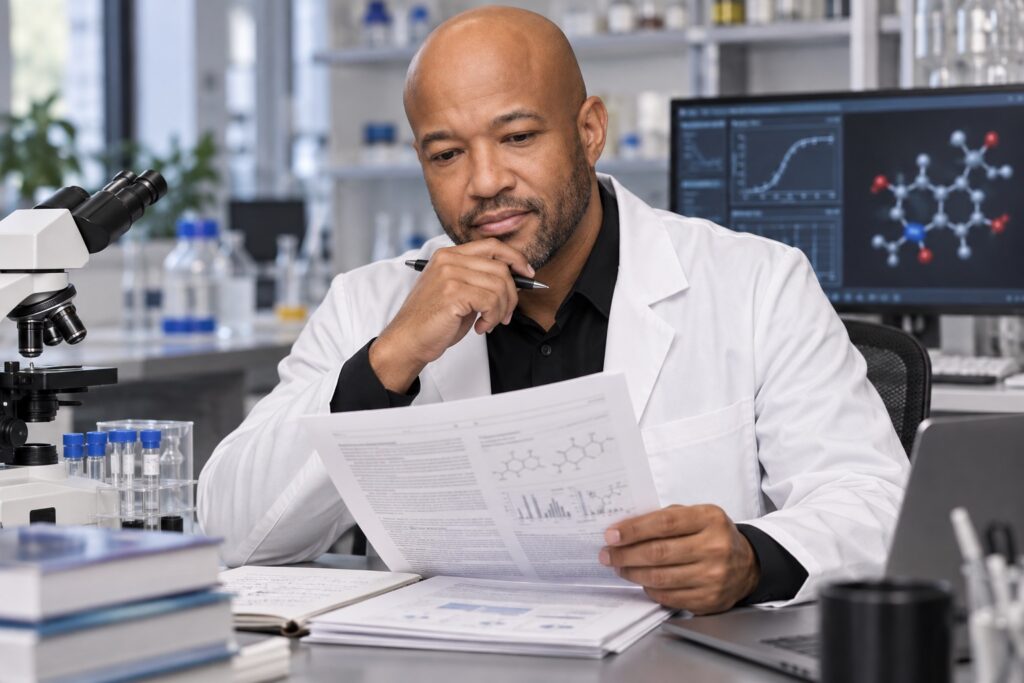
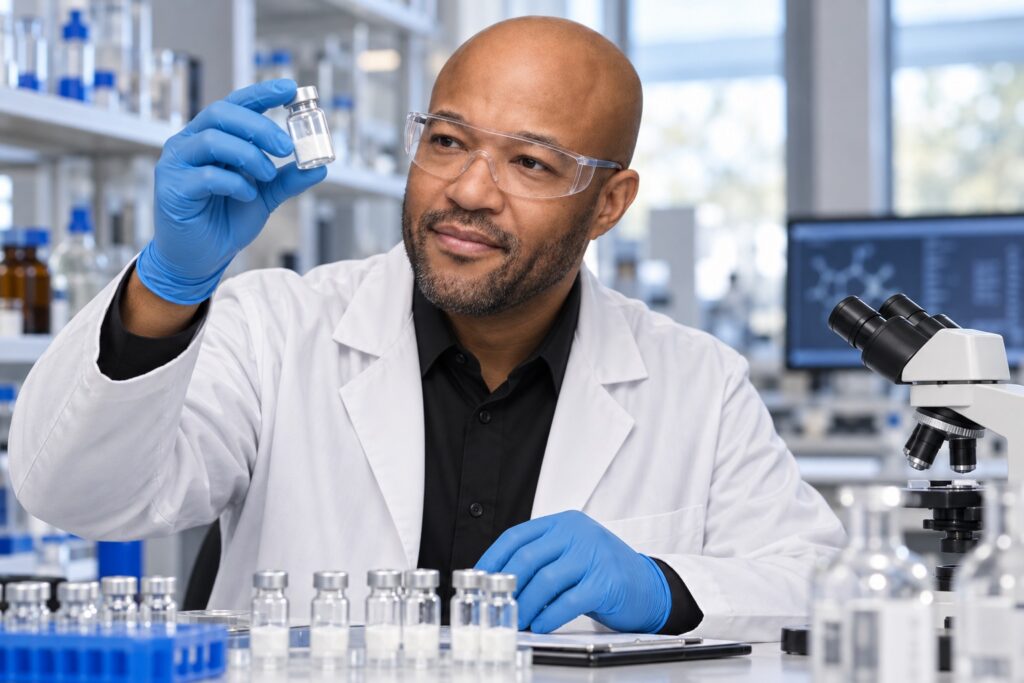
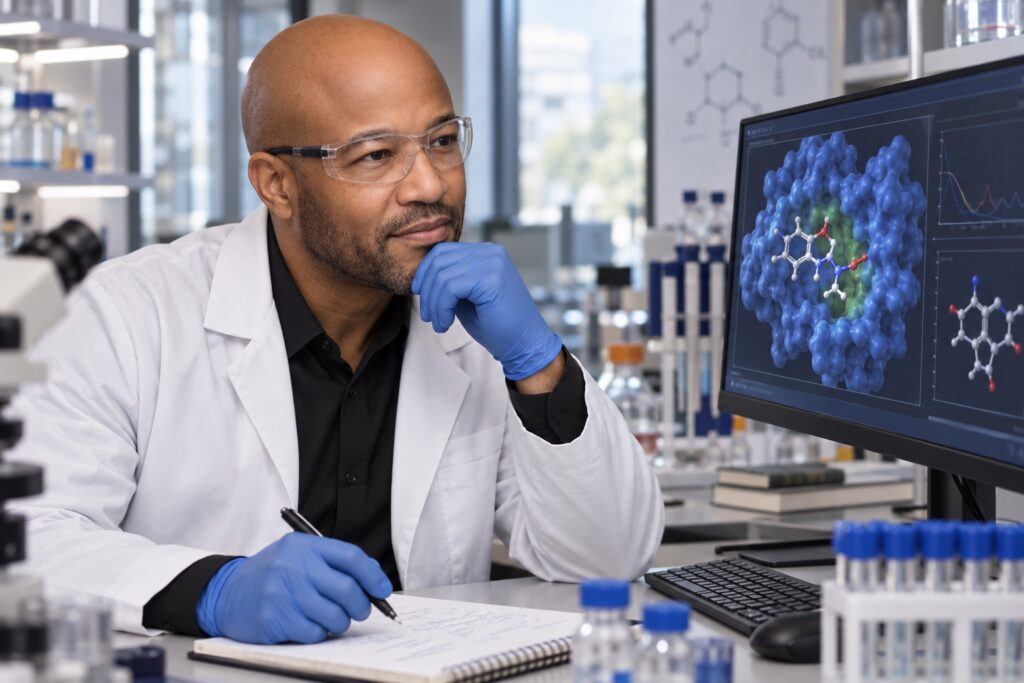
These laboratory portraits of Okorie Okorocha illustrate three connected parts of forensic toxicology review: examining scientific literature and analytical data, evaluating the specimen, and applying pharmacology to the interpretation.
Scientific education for attorneys, laboratories, students, and careful readers.
Okorie Okorocha, J.D., M.S., M.S.
START WITH THE RIGHT QUESTION
A result is one part of an evidence chain.
Forensic toxicology connects biological specimens, analytical chemistry, quality practices, and pharmacology. These guides explain what each part can show, what it cannot show alone, and what records support a reliable interpretation.
Analytical Methods
How laboratories separate, identify, confirm, and measure drugs, alcohols, and other compounds.
Explore 22 guides →02Specimens & Matrices
How collection, preservation, storage, and biological matrix affect what a result can mean.
Explore 15 guides →03Alcohol & Volatiles
Principles and limitations of blood, breath, and postmortem alcohol and volatile analysis.
Explore 5 guides →04Drug Analysis
Screening, confirmation, metabolites, emerging substances, and drug-specific interpretation.
Explore 17 guides →05Quality & Validation
The controls, performance studies, documentation, and review practices behind reliable testing.
Explore 18 guides →06Pharmacology & Interpretation
Absorption, distribution, metabolism, elimination, timing, effects, and evidentiary limits.
Explore 10 guides →07Postmortem Toxicology
Specimen selection, redistribution, decomposition, and the special limits of death investigation.
Explore 3 guides →ABOUT THE EXPERT
Science explained for the record.
Okorie Okorocha, J.D., M.S., M.S. combines graduate training in forensic science and forensic toxicology with legal training and extensive tribunal experience.
View professional profile“The first question is not what the number proves. It is what the method actually measured.”
PROFESSIONAL INQUIRIES